
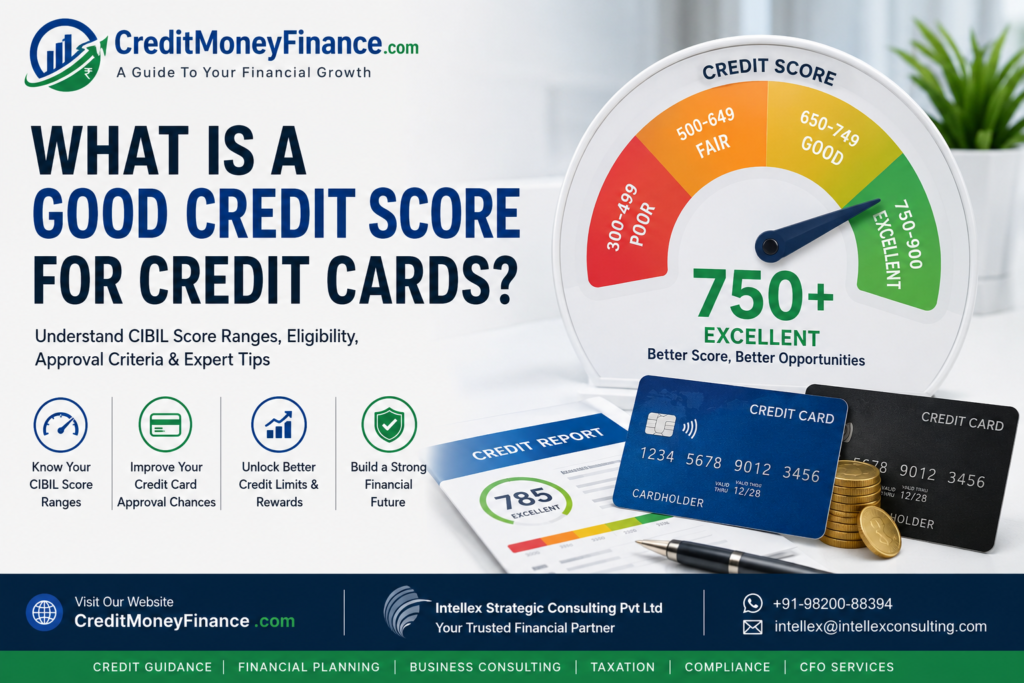
What is a Good Credit Score for Credit Cards in India? Complete Guide to CIBIL Score Ranges, Eligibility & Approval Tips.
Learn what is considered a good CIBIL score for credit cards in India. Understand credit score ranges, approval criteria, eligibility, and expert tips to improve your score for faster approvals and better credit card offers.
Your credit score plays a major role in deciding whether your credit card application gets approved or rejected. In India, banks and financial institutions closely evaluate your CIBIL score before offering a credit card, personal loan, home loan, or other financial products.
A strong credit score not only improves your chances of approval but also helps you access premium credit cards, higher credit limits, lower interest rates, cashback rewards, airport lounge access, and exclusive financial benefits.
This detailed guide explains what qualifies as a good credit score for credit cards, how CIBIL scores work, what score range banks prefer, and practical tips to improve your score quickly.
What is a CIBIL Score?
The TransUnion CIBIL score is a three-digit number ranging between 300 and 900 that represents your creditworthiness. It is calculated based on your financial history and repayment behaviour.
Banks use this score to evaluate how responsibly you manage credit and whether you are likely to repay borrowed money on time.
Your CIBIL score is influenced by several financial activities, including:
- Credit card payment history
- Personal loans and home loans
- Existing debt levels
- EMI repayment patterns
- Credit utilisation ratio
- Loan defaults or delays
- Frequency of loan or credit card applications
A higher score reflects stronger financial discipline and lower lending risk.
Understanding CIBIL Score Ranges for Credit Cards
300–499: Poor Credit Score
A score in this range signals a high risk of default. Banks may consider you financially risky, making it extremely difficult to obtain approval for most credit cards or loans.
Common Challenges:
- High rejection chances
- Very limited card options
- High interest rates
- Low credit limits
- Requirement of secured cards or FD-backed cards
Reasons for Low Scores:
- Missed EMI payments
- Loan defaults
- High outstanding dues
- Settlements or write-offs
- Excessive credit utilisation
If your score falls in this category, improving repayment habits should become your immediate priority.
500–649: Fair Credit Score
This range indicates average credit behaviour. While approval is possible, banks may still view your profile cautiously.
What to Expect:
- Limited credit card choices
- Moderate approval chances
- Higher annual percentage rates (APR)
- Lower credit limits
- Restricted premium benefits
Many entry-level credit cards are available for applicants within this range, especially if income stability is strong.
650–749: Good Credit Score
A score above 650 is generally considered a good credit score for credit card applications in India.
Banks view borrowers in this range as financially responsible individuals with manageable credit behaviour.
Advantages of a Good Score:
- Better approval probability
- Attractive cashback and reward cards
- Higher credit limits
- Lower interest rates
- Faster processing
This score range opens access to better financial products and more competitive credit card offers.
750–900: Excellent Credit Score
A CIBIL score above 750 is considered ideal by most Indian banks and NBFCs.
This range reflects excellent financial discipline and responsible borrowing behaviour.
Benefits of an Excellent Credit Score:
- Instant or pre-approved credit cards
- Premium travel and lifestyle cards
- Higher spending limits
- Lower finance charges
- Better negotiation power
- Faster loan approvals
- Access to exclusive banking offers
Individuals in this category are generally treated as low-risk borrowers.
What is the Minimum CIBIL Score Required for a Credit Card?
There is no universal minimum score fixed by all banks.
Each bank follows its own credit policy based on:
- Income level
- Employment type
- Existing liabilities
- City category
- Banking relationship
- Repayment history
- Credit score
However, most banks prefer applicants with scores above 700 for standard unsecured credit cards.
Can You Get a Credit Card with a Low Credit Score?
Yes, it is possible.
Applicants with lower scores may still receive:
- Secured credit cards against fixed deposits
- Entry-level cards
- Low-limit cards
- Add-on cards
However, such cards may come with:
- Higher interest rates
- Lower limits
- More restrictions
- Fewer rewards and privileges
Why Banks Check Your Credit Score Before Approving a Card
Banks analyse your score to estimate repayment risk.
A good score assures lenders that:
- You pay dues on time
- You manage debt responsibly
- You are less likely to default
- Your financial habits are stable
This reduces risk for lenders and improves your eligibility for premium financial products.
Factors That Affect Your Credit Score
1. Payment History
Timely payment of EMIs and credit card bills is the most important factor affecting your score.
2. Credit Utilisation Ratio
Using too much of your available credit limit negatively impacts your score.
Experts recommend keeping usage below 30%.
3. Length of Credit History
Older credit accounts improve your credibility.
4. Multiple Loan Applications
Frequent applications generate multiple hard enquiries that can reduce your score.
5. Mix of Credit
A healthy balance of secured and unsecured loans positively influences your score.
How to Improve Your CIBIL Score Quickly
Pay Bills on Time
This is the single most effective strategy for improving your credit score.
Maintain Low Credit Utilisation
Avoid maxing out your cards.
Avoid Multiple Applications
Applying for too many cards or loans within a short period can lower your score.
Monitor Your Credit Report
Regularly review your report for errors or fraudulent entries.
Avoid Loan Settlements
Settling loans instead of fully repaying them may damage your credit profile.
Keep Old Credit Cards Active
Older accounts help build longer credit history.
Best Practices Before Applying for a Credit Card
Before submitting your application:
- Check your latest CIBIL score
- Compare available credit card offers
- Understand annual fees and hidden charges
- Evaluate reward structures
- Match the card to your spending habits
- Ensure income eligibility criteria are met
It is also advisable to consult your bank executive before applying. They can review your profile and guide you regarding the best suitable card options and approval chances.
Why a Good Credit Score Matters Beyond Credit Cards
A strong credit score helps in many financial situations, including:
- Personal loans
- Home loans
- Car loans
- Business financing
- Overdraft facilities
- Buy-now-pay-later approvals
- Better insurance and financial offers
Good credit behaviour creates long-term financial credibility.
Final Thoughts
A good credit score is one of the most powerful financial assets you can build. While different banks follow different approval criteria, maintaining a CIBIL score above 750 significantly improves your chances of getting the best credit cards with premium rewards and lower borrowing costs.
Financial discipline, timely repayments, and responsible credit usage are the keys to maintaining a healthy credit profile.
If you are planning to apply for a new credit card, improving your score beforehand can help you unlock superior financial opportunities and faster approvals.
Remember: Paying your bills on time consistently is the fastest and most reliable way to cross the 750 mark and enjoy premium credit card benefits.
About Us
CreditMoneyFinance.com
For expert guidance on credit cards, personal finance, credit improvement strategies, business finance, taxation, compliance, and financial advisory services, connect with:
- WhatsApp: +91-98200-88394
- Email: intellex@intellexconsulting.com
Intellex Strategic Consulting Pvt Ltd
More Featured Articles:
Build a High-Income Career in Financial Services | Pan India Loan Distribution Opportunity.
RBI Tightens NBFC Lending Norms: Mandatory Board Policy for Loans to Defaulting Borrowers.
The Hidden Home Loan Strategy Most Indians Overlook – And It Could Be Costing Them Crores.
Collateral-Free Business Loans in India: A Complete Guide for SMEs & Startups (2026 Edition).
Personal Loans and Business Loans and Professional Loans in India (2025):