
How to Improve Your Financial Literacy: A Complete Guide to Smarter Money Decisions.
Learn how to improve your financial literacy with practical tips on budgeting, saving, investing, debt management, and long-term financial planning. Build confidence and take control of your money today.
Introduction: Why Financial Literacy Matters More Than Ever.
In today’s fast-paced and financially complex world, understanding money is no longer optional, it is essential. Financial literacy is not just about knowing how to earn money; it is about managing it wisely, growing it sustainably, and protecting it from unnecessary risks.
At its core, financial literacy equips individuals with the knowledge and skills needed to make informed financial decisions. It builds the confidence required to navigate everyday financial choices as well as major life decisions such as buying a home, investing for the future, or planning for retirement.
A financially literate person is not necessarily wealthy but they are aware, prepared, and in control.
What Does Financial Literacy Really Mean?
Financial literacy goes beyond basic arithmetic or knowing how to use a bank account. It is a comprehensive understanding of how money works in real life and how to use it effectively to achieve personal goals.
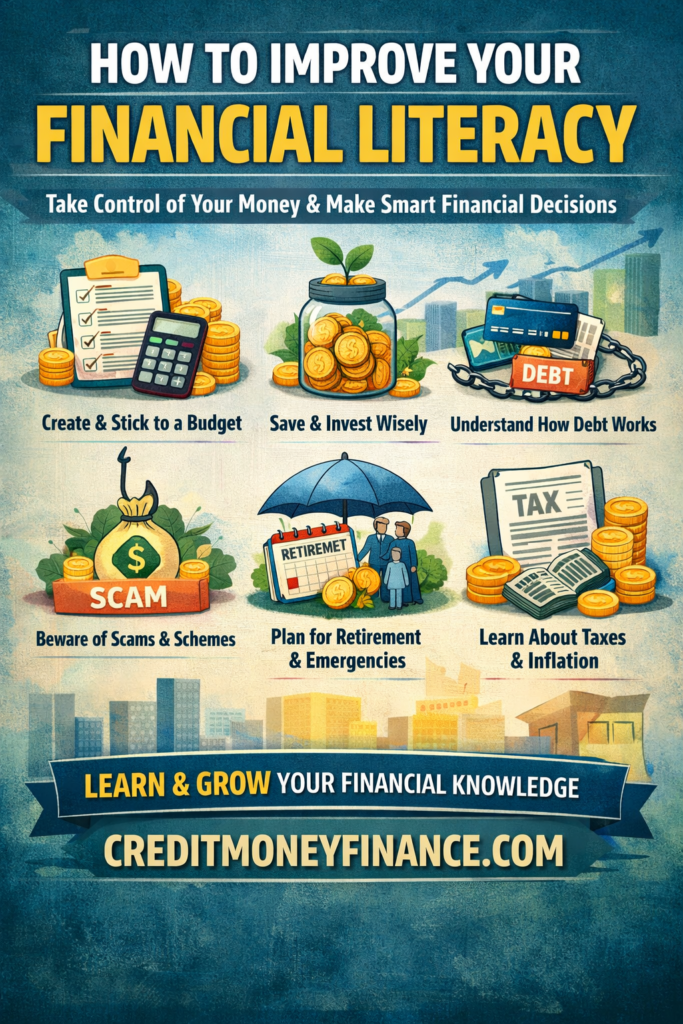
A financially literate individual understands how to create and stick to a budget, ensuring that expenses do not exceed income. They recognize the importance of saving regularly and investing wisely to build long-term wealth.
They also understand how debt works how interest accumulates, what responsible borrowing looks like, and how to avoid falling into debt traps. Equally important is the ability to evaluate financial products such as loans, insurance, and investment options by weighing their risks and rewards.
Planning is another cornerstone.
Financial literacy includes preparing for emergencies, retirement, and major life expenses such as education, marriage, or purchasing property. It also involves understanding how taxes and inflation can affect purchasing power and long-term financial stability.
Financial Literacy in Everyday Life.
Financial literacy is not just theoretical , it plays a role in daily decision-making.
It begins with a simple but powerful principle: do not spend more than you earn. This basic habit alone can prevent a large number of financial problems.
A financially aware person compares prices before making purchases and carefully reviews interest rates before taking loans or using credit cards. This habit ensures that money is used efficiently and unnecessary costs are avoided.
Understanding compound interest is another powerful advantage. Over time, even small investments can grow significantly when interest is earned on both the principal and accumulated interest. This principle is the foundation of long-term wealth creation.
Equally important is the ability to recognize financial scams. Fraudulent schemes such as “get rich quick” offers or Ponzi schemes often promise high returns with little risk something that rarely exists in legitimate finance.
Financial literacy helps individuals identify and avoid such traps.
Practical Ways to Improve Financial Literacy.
Improving financial literacy is a continuous process, and the good news is that it is accessible to everyone.
One of the most effective ways to begin is by enrolling in financial education courses. These can be free or paid and are often available online, making them convenient for learners at all levels.
Using budgeting apps can also make a significant difference. These tools help track income, monitor expenses, and identify areas where spending can be reduced. Over time, they build discipline and awareness.
Another valuable approach is to follow reputable personal finance blogs, podcasts, and educational video channels.
Consuming reliable financial content regularly helps reinforce concepts and keeps you updated with current trends and strategies.
Seeking guidance from financial advisors or experts can provide personalized insights, especially when dealing with investments, tax planning, or major financial decisions. Professional advice can often prevent costly mistakes.
Finally, financial literacy should begin early. Teaching children and teenagers basic financial concepts such as saving, budgeting, and the value of money can set the foundation for lifelong financial well-being.
The Long-Term Benefits of Financial Literacy.
The impact of financial literacy extends far beyond day-to-day money management. It reduces financial stress, improves decision-making, and increases the likelihood of achieving long-term goals.
Individuals who are financially literate are better prepared for emergencies, less likely to fall into debt, and more capable of building wealth over time. They are also more confident in navigating financial systems, whether it involves investing in markets, understanding insurance policies, or planning retirement.
In a broader sense, financial literacy contributes to economic stability not just for individuals, but for families and communities as well.
Conclusion: Take Control of Your Financial Future.
Improving financial literacy is not about becoming an expert overnight. It is about taking consistent, informed steps toward better money management.
By understanding how money works, making thoughtful decisions, and continuously learning, anyone can build a strong financial foundation. The journey may begin with small changes, but over time, those changes can lead to significant financial security and independence.
Financial literacy is, ultimately, one of the most valuable life skills one that empowers you to take control of your present and shape your future with confidence.
Team: Creditmoneyfinance.com
More Featured Articles:
The Strategic Role of Venture Capital and Private Equity in the Global Startup Ecosystem.
Scaling Smart: How Businesses Can Grow Rapidly Through the Franchise Route:
₹100 Crore for a Nobel Prize: Why Chandra Babu Naidu Is Thinking Decades Ahead of Indian Politics.
Speciale Invest Launches ₹1,400 Crore Growth Fund II to Accelerate India’s Deeptech Scale-Up Story
Angel Investing in Bharat: The New Wave of Micro-Angels
Funding and Investment Options to Grow India’s Real Estate & Allied Businesses
How Ex-Bankers Can Build a High-Income Second Career Through a Corporate DSA Partner Program
SME IPO in India: A Comprehensive Guide for Growing Businesses Looking to Go Public:
Freelance / Fee-Sharing Opportunities for Chartered Accountants in Smaller Cities Across India